The Ingalls Family and America at 250 - Part 1
This feature is the first of a several part series highlighting and recognizing our nation’s 250th anniversary of independence. It feels only fitting that as we celebrate America’s semiquincentennial, we pause to reflect not only on our country’s founding, but on the families who have quietly sustained it for generations.
Part One the Ingalls Family,
Writing about oneself is never easy, so if you will indulge me, I would like to make this less about me personally and more about the family into which I was born, a family whose story has been intertwined with the American experience from the very beginning.
You may recognize the name Ingalls.
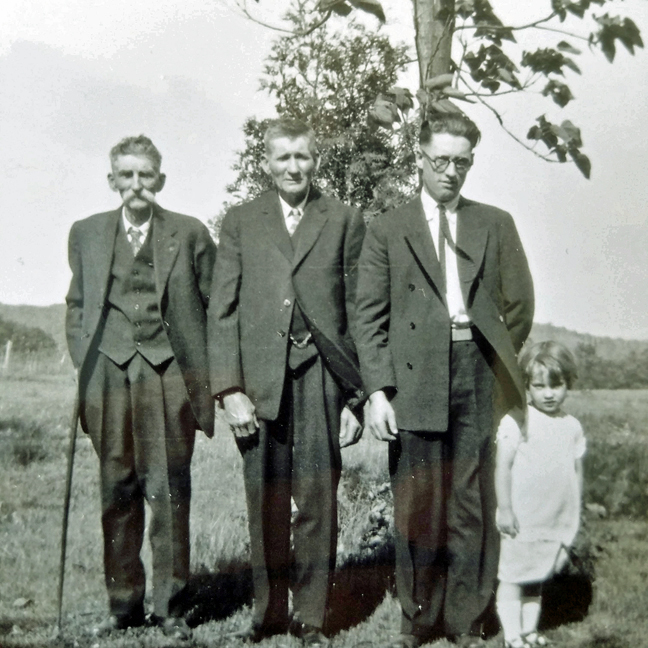
Yes, I am part of the same Ingalls family that produced Laura Ingalls Wilder, author of the beloved Little House on the Prairie books and inspiration for the television series that followed. Through her writing, the world came to know one branch of our family, a pioneering family navigating hardship, opportunity, faith, and perseverance on the American frontier.
What many may not realize is that our family’s story reaches even further back.
Through genealogical research, I have discovered that my many-times great-grandfather, Jonathan Ingalls, served in the Continental Army during the Revolutionary War. That service anchored our family in what would become the United States of America. From that moment forward, the Ingalls name has been present in the unfolding American story.
Over the years, I have verified our family’s service in several of the wars our nation has endured, though I suspect there are still chapters yet to uncover. Like so many American families, ours has answered the call in times of conflict and then returned home to resume the steady, faithful work of everyday life.
And that, perhaps, is the greater story.
Beyond military service, beyond westward expansion, beyond published books and television adaptations, we have lived as an average American family. We worked the land. We built homes. We raised children. We endured uncertainty. We adapted to change.
Laura’s writings secured our place in American cultural history not because we were extraordinary, but because we were ordinary. She told the story of an average American family living through extraordinary times. That distinction matters.
It is the average American family that has always been the strength of this nation.
I have often said that families like ours represent the fabric of America. That is not an original thought, but it is one worth repeating, especially in this year when we commemorate 250 years of independence. A nation is not held together by proclamations alone. It is woven together by its people. We are the threads that make up the American flag. Without the threads, there is no flag. Without families, there is no nation.
Yet there is a sobering reality I have come to understand.
For most of us, two generations after we leave this world, the details of our lives begin to fade. Stories go untold. Photographs lose their names. Achievements become footnotes, and eventually, even those are forgotten.
More about this in the next part.
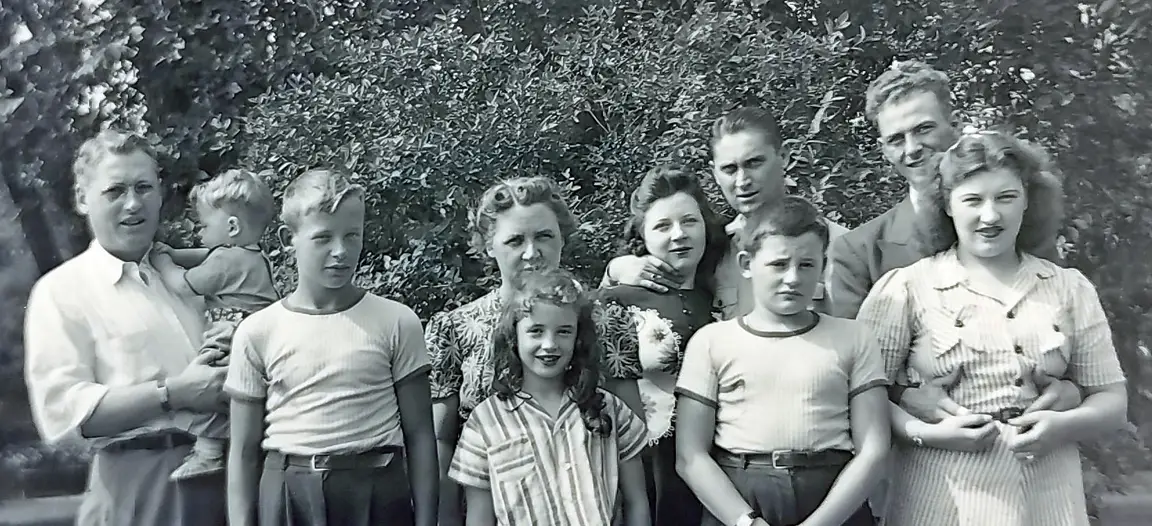
The people in the article photo are the Ingalls family from about 1943. From the left, Monty (Grandpa) holding John, Gene (my Dad) , Marie (Grandma), Joyce, Helen, Ed, Eugene, Ralph and Fran.